


Social networking is probably the most significant business development of 21st Century.
During the year, social networking morphed from a personal communications tool for young people into a new vehicle that business leaders are using to transform communications with their employees and customers, as it shifts from one-way transmission of information to two-way interaction.
A year ago, many people poked fun at Facebook as a place where kids shared their latest party news. Today more than 600 million users worldwide are active on the site. The most rapidly growing demographic is people over forty. More than 300 million people spend at least one hour a day on Facebook. Approximately two hundred million people are active on Twitter in spite of – or because of – its 140-character limitation. Another 100 million use LinkedIn. None of these social networks even existed at the beginning of the decade.
Many top leaders are active social network users. Why? Because these social networks are a unique way of broadly communicating real-time messages to the audiences they want to reach. They can write a message anywhere, anytime, and share it with interested parties without any public relations meddling, speech writers, airplane travel, canned videos, or voicemail messages. Now their words are much more authentic and can be remarkably empowering.
More and more companies are also realizing that social media can be a powerful crisis management tool:
The biggest threat presented by social networks is that the power has shifted to the customer who can, if dissatisfied with the business, impact the business and brand very publically. Alone this year there have been some major attacks:
In fact, brands who take on board the criticisms they hear on Facebook, Twitter or through social media monitoring, and then try to improve on them, will be the ones who continue to grow and prosper. Every single piece of information that is picked up online, be it good or bad, is a valuable learning.
-
Pratik Patel (B.D.M.)
Shreeji Ceramic Ind.
Morbi - INDIA
Saturday, January 8, 2011


Thursday, December 30, 2010
Tiles for You
Tile has been around for a long period of time. Tile was used as far back as ancient Greece and Rome. The tile at that time was mostly made of marble or other polished stones.
The Tiling used in homes today is mostly made from ceramic. Ceramic is somewhat inexpensive to wears well in homes and is impressive that most people are willing to pay to have installed in their homes.
Tile consisting of marble is very expensive and is not used in most homes. Like everything else in home décor, the trends for tile flooring have changed gradually throughout the ages when it comes to design, quality and materials.
When considering tiles materials for various rooms in the house, for the kitchen and bathroom many people choose due to its durability, beauty and resistance to water and humidity. When ceramic materials are installed and cared for properly, they can last the life of the house and maintain their appearance.
-
Pratik Patel (B.D.M.)
Shreeji Ceramic Ind.
Morbi - INDIA
Sunday, December 5, 2010
Tile may be the perfect option for your life.
Come into our showroom and see for yourself why tile may be the perfect option to fit both your residence and your lifestyle.
Features of Ceramic Tile
· Boundless selection of colour, pattern and texture
· Fits any budget
· Exceptionally durable, escalating the value of your home
· Holds temperature longer
· Simple to clean
· Everlasting finish never fades or discolours
· Environmentally friendly
Features of Vitrified Tiles
· Lasts a lifetime when installed properly
· Non-porous, neat, luxurious and beautiful
· Very solid and strong
· Low maintenance and extremely resistance to abrasion
· Enormously hygienic and Environment friendly
All of our ceramic and vitrified tiles are completely natural and healthy for your environment.
Choosing ceramic or natural stone for your home is one of the most environmentally friendly decisions you can make. Both are composed of pure clays and minerals.
Our tile is made of natural raw materials, which are abundant in environment. The manufacturing process fabricates no harmful emissions and waste water is generally recycled. The long life of ceramic tile means less waste.
Moreover, our extraordinary technical qualities give tiles significant advantages over alternative floor and wall coverings.
-
Pratik Patel (B.D.M.)
Shreeji Ceramic Ind.
Morbi - INDIA
Sunday, November 28, 2010
What is the Universal Design?
Indians are living longer, and that means more of us are sticking around to face the challenges that come with extended life spans. As Boomers cross the threshold into their golden years, they want that threshold to still lead into their own beloved homes—not facilities for the aging.
Universal Design is a practice that ensures spaces are comfortable, usable and accessible no matter the age or stage of life of the individuals using those spaces. In Universal Design, all aspects of space planning and all products and materials are chosen for functionality first and foremost.
Though the idea is to make things and places viable for everyone, designers must apply Universal Design in a very thoughtful, personal way. Universal Design touches every square foot of an environment, providing careful consideration for its usability no matter people’s physical abilities. Just as Universal Design has made commercial facilities accessible for everyone, it can make residences viable for aging occupants.
Certainly, the selection of flooring and surfacing materials plays a big part in the creation of a universally designed home or facility. Tile is an important choice to meet the needs of an aging populace. It’s easy to keep clean, won’t trap allergens and allows for mobility for wheels on a wheelchair or the scuffle of slippered feet accompanied by a walker.
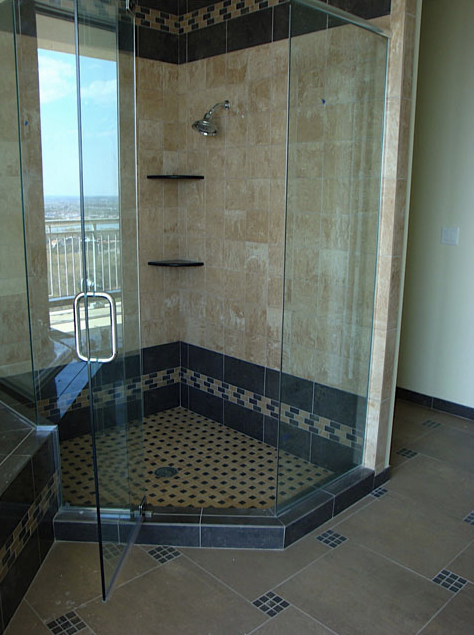
Tile used in conjunction with innovative drainage and installation systems allows for transition less or nearly transition less showers. With proper planning, shower areas can be flush with the main floor of the bathroom or wet area, eliminating potential trip hazards, allowing for easier cleaning and supplementing convenience and comfort.

More and more people are deciding it’s better to make choices for the future in the present, while there’re funds and stamina to handle the remodel or new construction project.
The investment in tile for Universal Design is forward-thinking and wise. Tile is a lasting material that is beautiful and easily maintained, a fitting selection for now and the future.
-
Pratik Patel (Business Development Management)
Shreeji Ceramic Ind.
Morbi - INDIA
Pratik Patel (Business Development Management)
Shreeji Ceramic Ind.
Morbi - INDIA
Saturday, November 20, 2010
Doing bit for Environment. Shreeji People Makes it true.
Before few months ago, we, the Shreeji Group has initiated Going Green Society at workplace by saving excessive misuse of natural products. This act was basically taken to save trees as well as fuel and money. Now days, we keep reusing paper through store up the blank side of any printed paper, and in result the total number of paper consumption graph has gone decreased by 25% within 6 months. It’s very easy and possible step that all we could do in our routine.
A greener workplace can mean a lighter ecological footprint, a healthier and more productive place to work. Whether you’re, the boss or the employee, whether your office is green already or still waiting to see the light, some practical steps can lay the foundation for a healthy, low-impact & environment friendly workspace.
Does anyone know that HP Environment offers recycling of empty printer cartridges by saving production for superfluous plastic? That’s very bit but affordable and convenient service in saving environment. Since last 5 months, Shreeji Group has returned up to 35 empty cartridges to HP and helped environment to keep it clean.
From how you get to work, we recommend telecommuting method. Please do not print as you see email in your screen. First you Read it then only Print if necessary. Shreeji Group is now in action to grow more and more trees around factory building and make the area Green and Clean.
Thanks to all our supportive and hard working Going Green Society. Wish them all a very glad success in golden effort towards our Earth.
Go Green.....
-
Pratik Patel (Business Development Management)
Shreeji Ceramic Ind.
Morbi - INDIA
Pratik Patel (Business Development Management)
Shreeji Ceramic Ind.
Morbi - INDIA
Sunday, November 14, 2010
Some basic steps to know the installation of Tiles.
Dear all,
Best selection of Tiles for your home is not making sense until you have fit it accordingly. Creation and Cleanness are the main points to be taken while installing ceramic tiles. So as far we concern, installing a Ceramic Tile is not a simple job. Those with a basic knowledge of home improvement can save a few bucks on professional installation, but those with no experience in basic construction may find it more complicated than they expected.
So before beginning any tiling project, a few steps must be taken. Most importantly, the sub floor must be checked and levelled well to ensure that there will be no imperfection under the new tile that could cause cracking later. Tile should be laid starting from the doorway out to make sure that the floor looks even when entering the room. As tiles are put into place, a level can ensure that no tile is placed higher than another. If necessary, a small block of wood with a hammer can gently press tile down when necessary. Allow the full tiles to dry overnight before walking on them if at all possible. Now, border tiles can be cut. Put a spacer by the wall and place another full tile against the spacer and offset on top of the other loose tile. Draw a line across the lower tile using the upper one as a guide. The line shows where to cut the lower tile to make it fit in the space needed against the wall. Nippers should be used for unusually shaped cuts like those around round objects. Set these pieces with adhesives just as with the full pieces and allow setting overnight once again. Next step is to remove the tile spacers and lay the grout float over the tiles at a 45`degree angle. Gently push the grout down into the spaces to be sure there are no pits. Excess grout should be wiped with a sponge and bucket. Some manufacturers may require the grout to be sprayed with water periodically while drying to prevent cracking, so be sure to check package instruction. Allow the grout to cure for a week before using a silicone sealer to protect the grout from water damage or stains.
The excellence and exhaustive fixing method is must to show your floor nit and tidy and it also presents the extra ordinary look while seeing it with very first spectacle. I found this information very useful to who doesn't know any basic ideas about tiling floor. Many of our customers purchase the very latest designed tile with great expectations but latterly they complained us that it is not up to that mark. Tiles isn’t glowing its design and quality. So I request our every client to read the basic instructions before they apply the tiles because “we understand your choice.”
Saturday, October 2, 2010
The contribution of the design project to successful ceramic tiling
While using ceramic tiles of the same type, size and finish, some floors and walls achieve a strong impact and are capable of making a significant contribution in terms of architectural quality, while others go totally unnoticed. What is it that makes the difference? The quality of the project. It might sound obvious, but it is not.
Here, we have frequently pointed out that Shreeji ceramic tiles are unique amongst floor and wall covering materials for their ability to combine aesthetic and technological qualities. This means not only high performance characteristics, which can be measured and certified by means of comprehensive standards, but also the intrinsic characteristics of the production process which a number of very different qualities to be combined in a single tile. At the same time their characteristics of the functionality and durability allow them to perform their functions to perfection. Ceramic tile is a sustainable product, whose environmental impact over its entire lifecycle from raw materials quarrying through to industrial production, demolition and disposal of debris has been drastically reduced over the years. This is a result of intensive technology and plant engineering innovation promoted by Shreeji ceramic.
So while there are no doubts about the quality of the materials, designers must be aware that each individual product has to be specified and installed to the highest standards if its aesthetic and technical potential is to be fully harnessed.
The role of designers is therefore not limited to product selection.
-
Pratik Patel (Business Development Management)
Shreeji Ceramic Ind.
Morbi - INDIA
Here, we have frequently pointed out that Shreeji ceramic tiles are unique amongst floor and wall covering materials for their ability to combine aesthetic and technological qualities. This means not only high performance characteristics, which can be measured and certified by means of comprehensive standards, but also the intrinsic characteristics of the production process which a number of very different qualities to be combined in a single tile. At the same time their characteristics of the functionality and durability allow them to perform their functions to perfection. Ceramic tile is a sustainable product, whose environmental impact over its entire lifecycle from raw materials quarrying through to industrial production, demolition and disposal of debris has been drastically reduced over the years. This is a result of intensive technology and plant engineering innovation promoted by Shreeji ceramic.
So while there are no doubts about the quality of the materials, designers must be aware that each individual product has to be specified and installed to the highest standards if its aesthetic and technical potential is to be fully harnessed.
The role of designers is therefore not limited to product selection.
-
Pratik Patel (Business Development Management)
Shreeji Ceramic Ind.
Morbi - INDIA
Subscribe to:
Posts (Atom)